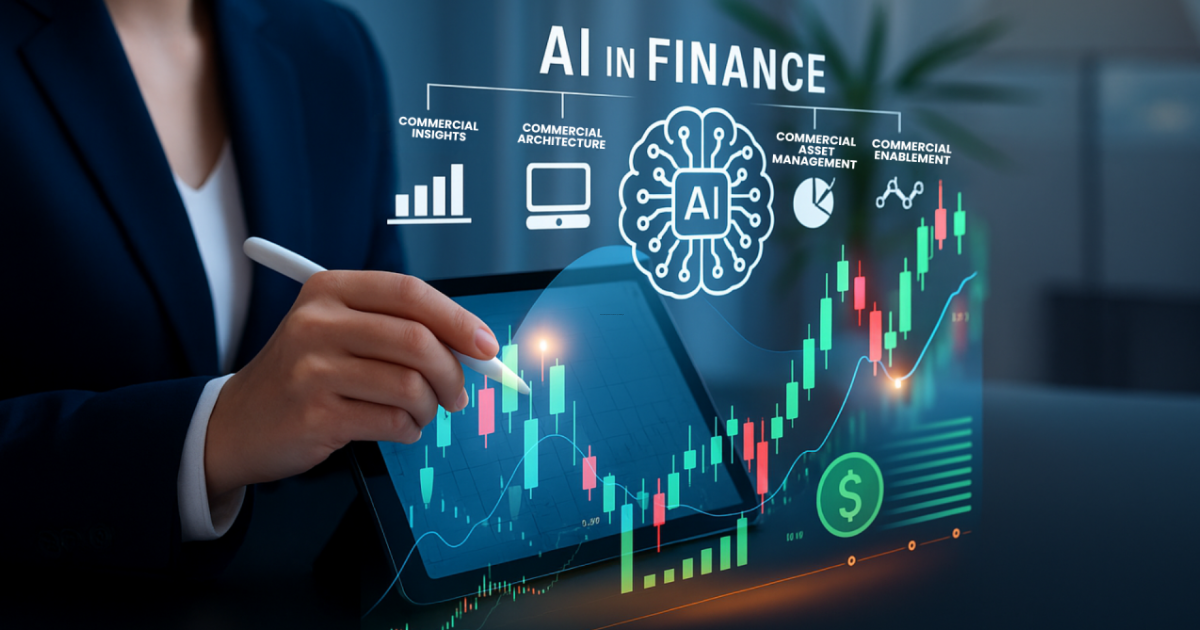
AI in Finance: Transforming the Future of Financial Services
Artificial intelligence (AI) is rapidly reshaping the financial services industry. From banking and insurance to investment management and payments, AI technologies are improving efficiency, enhancing decision-making, and reducing risk. As financial institutions face growing competition and increasing customer expectations, AI has become a critical tool for innovation and long-term growth.
How AI Is Used in Finance
AI in finance refers to the use of machine learning, natural language processing, and data analytics to automate processes and generate insights from large volumes of data. Financial institutions deal with massive amounts of structured and unstructured information, making AI particularly valuable for identifying patterns that humans might miss.
One of the most common applications of AI is in fraud detection. AI systems analyze transaction behavior in real time to identify suspicious activity. Unlike traditional rule-based systems, AI models can adapt to new fraud techniques, reducing false positives while improving accuracy.
AI in Banking and Customer Service
In retail banking, AI-powered chatbots and virtual assistants are transforming customer service. These tools handle routine inquiries, such as balance checks or payment issues, allowing human agents to focus on more complex tasks. AI-driven personalization also helps banks recommend products and services based on individual customer behavior and financial goals.
Credit scoring is another area where AI is making a significant impact. By analyzing alternative data such as spending patterns and transaction history, AI can provide more accurate credit assessments. This can improve access to credit while reducing default risk.
AI in Investment and Wealth Management
Investment firms increasingly rely on AI to support trading strategies and portfolio management. Algorithmic trading systems use AI to analyze market trends, news, and historical data at high speed, executing trades with minimal human intervention.
In wealth management, robo-advisors use AI to offer automated investment advice based on a client’s risk tolerance and financial objectives. These platforms make investment services more accessible and affordable, particularly for younger or first-time investors.
Risk Management and Compliance
Managing risk and meeting regulatory requirements are major challenges for financial institutions. AI helps automate compliance processes by monitoring transactions, flagging unusual behavior, and generating reports for regulators.
Natural language processing allows AI systems to review regulatory documents and internal policies, reducing the time and cost associated with compliance. This not only improves accuracy but also helps institutions respond more quickly to regulatory changes.
Benefits of AI in Finance
The benefits of AI adoption include increased efficiency, cost reduction, improved accuracy, and better customer experiences. AI systems operate continuously, process data at scale, and minimize human error.
By automating repetitive tasks, financial professionals can focus on strategic decision-making and customer relationships. AI also enables more proactive risk management, helping institutions identify potential issues before they escalate.
Challenges and Ethical Considerations
Despite its advantages, AI in finance presents challenges. Data quality and bias can affect AI outcomes, leading to unfair or inaccurate decisions. Financial institutions must ensure transparency and accountability in AI models, particularly in areas like credit approval and fraud detection.
Cybersecurity and data privacy are also critical concerns, as AI systems rely heavily on sensitive customer information. Strong governance frameworks and ethical guidelines are essential to building trust.
Conclusion
AI is transforming finance by making systems smarter, faster, and more responsive. From fraud detection and customer service to investment management and compliance, AI is redefining how financial services operate. While challenges remain, responsible and transparent use of AI will play a central role in shaping the future of the financial industry.